
As I’d mentioned before, I’ve started working with fruit juice as a sweetener in some baking experiments. Why not just use agave or maple syrup, you ask? Well, there is some controversy regarding the safety of agave nectar in larger quantities (just Google it, if you’re curious) and maple syrup is terribly expensive to be throwing willy-nilly into every recipe. That combination, plus a curious situation that happened to the son of a friend of mine, had me wondering what options there were for good baked goods made with fruit and fruit juice.
A former co-worker of mine came to me with one of the more perplexing food intolerances I’ve been asked about: her son could tolerate cane sugar and fruit sugar, but not within 4 hours of each other or he would break out into hives. She was looking for baked snacks she could pack up to send with him to daycare that wouldn’t cause him to react with the fruit juice he was served.
It got me thinking about baking with fruit juice. Transitioning from a solid sugar (cane) to any sort of liquid changes the chemistry of a recipe. Fruit juice in itself isn’t sweet enough or thick enough to do much of anything in a recipe. Even condensed fruit juice isn’t the best option, as it’s viscosity if still very thin. So, I determined the best way to approach this was to take some fruit juice concentrate and further reduce it, creating a thick juice syrup with a better consistency for baking.
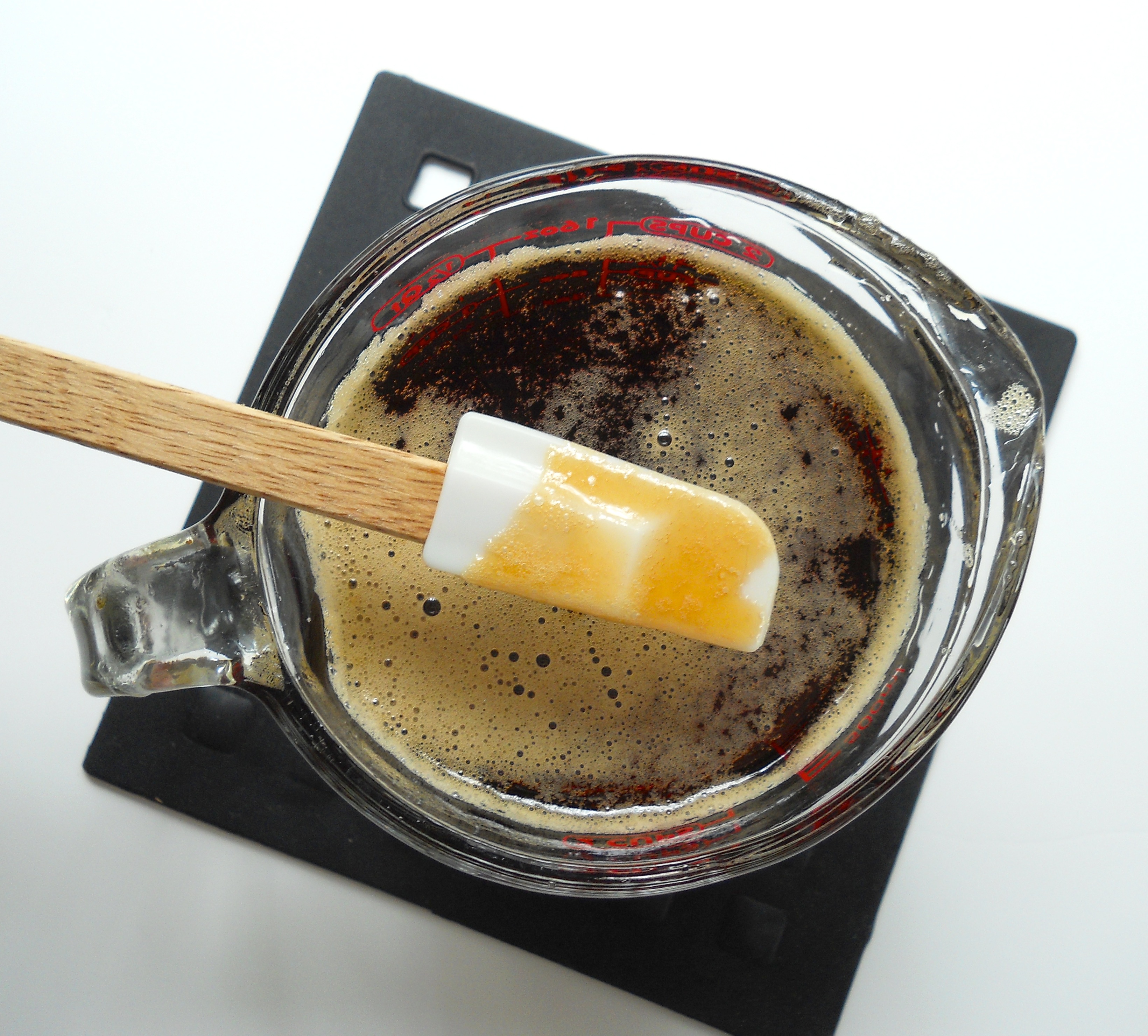
Fruit Juice Reduction
1- 12 oz. container of 100% fruit juice concentrate (more neutral flavors like apple or white grape are recommended, unless a bolder flavor will work with what you’re making)
In a pot on the stove top, simmer the juice concentrate until reduced by 1/3 (1 container of juice should reduce down to 1 cup), about 10 minutes. Once it’s started to reduce, I typically start pouring it into a measuring cup and if it’s not reduced enough, keep dumping in back in the pot to simmer some more. Remove from heat and let juice cool completely before using. Store leftover FJR in a container in the fridge for up to 2 weeks.
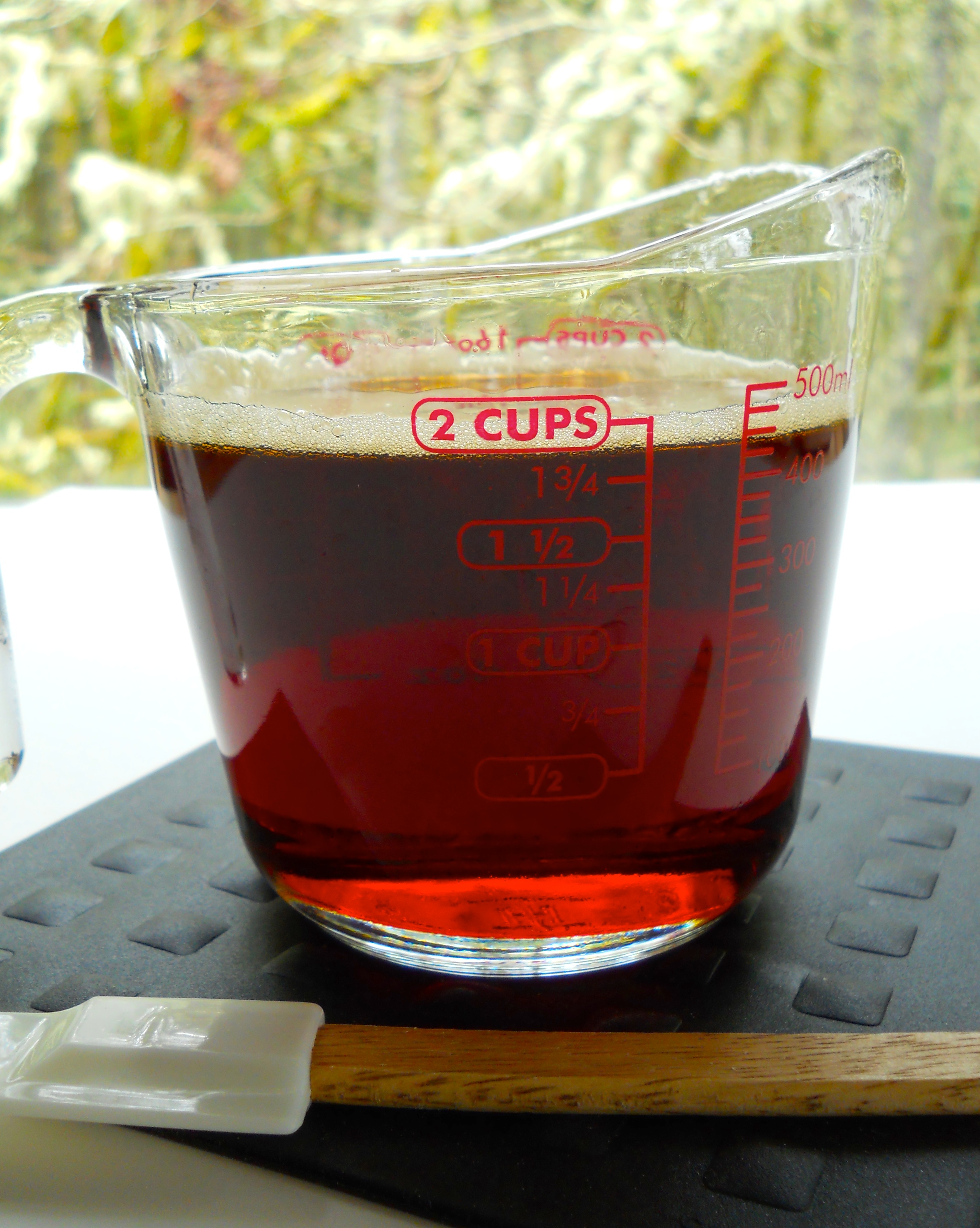
Unfortunately, there is no easy x-for-x substitution for using this in recipes. How much depends on many factors including the kind of baked good, the amount of other liquids, the amount of sweetener, etc. Rest assured, I am working on rounding up a posse of recipes using this reduction. Keep your eyes out for later this week, when I unveil my first fruit juice sweetened recipe!


This is great! I’m impressed by your creativeness and am looking forward for recipes. And how weird is that intolerance? Must have taken a while to figure it out.
Yes, it was really hard for them to figure out. It’s the weirdest thing I’ve ever heard. Usually it’s an all-or-nothing thing, you know?
I’m looking forward to seeing what creative recipes using that fruit juice reduction you came up with!
Thanks, Josiane! It’s definitely a work in progress!
Juiced 4 lbs of red grapes, 1 pound white and 1 large Honey Crisp apple and reduced, took a bit longer than the method you posted but the flavor is worth the extra work. Looking forward to seeing what you’ve discovered as far as baking with the reduced juice. Great blog, keep up the good work!